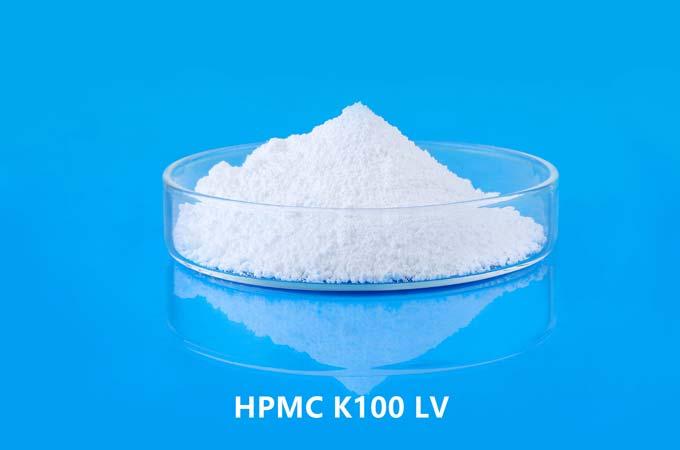
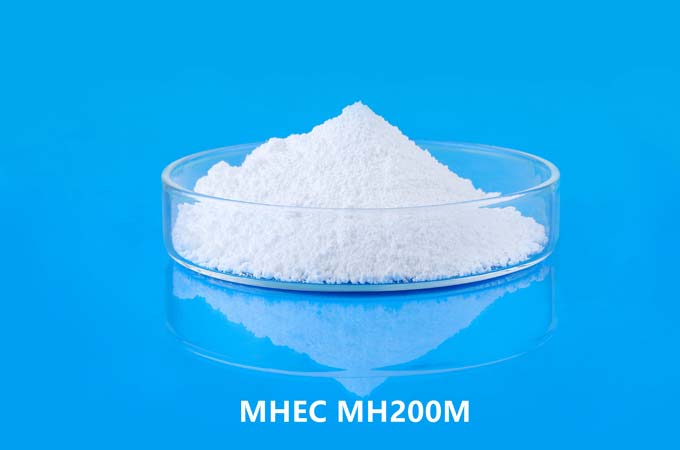
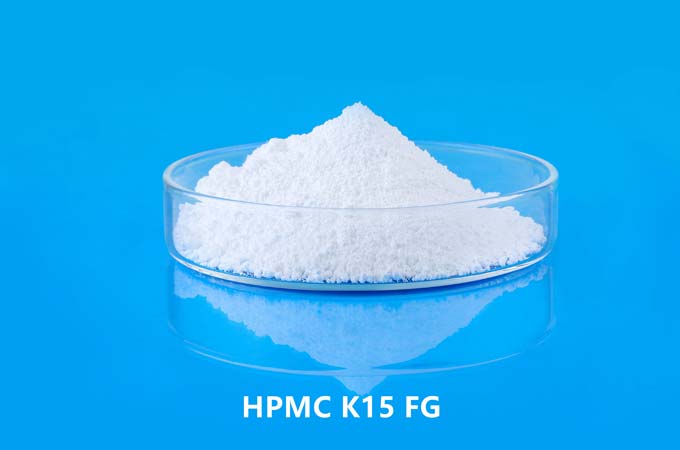
Polyanionic Cellulose is a high-molecular water-soluble cellulose ether made by introducing anionic groups (such as carboxymethyl) through chemical modification reactions based on natural cellulose. As a water-soluble polymer with excellent performance and wide application, PAC has demonstrated significant application value in multiple fields such as oil drilling, papermaking, ceramics, medicine, food, and daily chemicals.
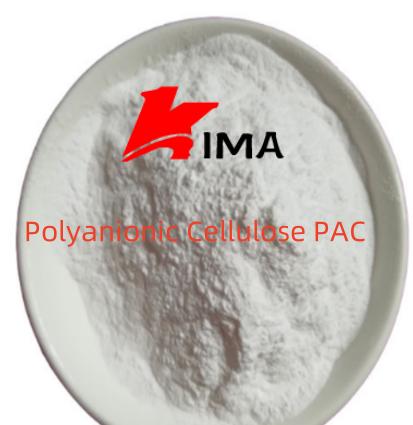
Main performance characteristics of PAC
1.1. Excellent thickening and rheological regulation properties
PAC can dissolve rapidly in aqueous solution, forming a transparent or semi-transparent high-viscosity solution. Its molecular chain contains a large number of hydrophilic anionic groups, which can effectively regulate the viscosity and fluidity of the solution and has good rheological stability. Compared with sodium carboxymethyl cellulose (CMC), PAC has stronger viscosity retention under high-salt and high-temperature conditions, making it particularly suitable for high-temperature deep Wells and complex environments.
1.2. Excellent salt resistance and temperature resistance
The anionic groups introduced into the molecular structure of PAC can form a stable hydration layer with salt ions, thereby effectively resisting the influence of electrolytes. Whether in saturated brine, seawater or highly mineralized drilling fluid, PAC can still maintain a high solubility and viscosity. In addition, its thermal stability usually reaches 120 to 150℃, and some high-temperature products can even withstand temperatures above 180℃.
1.3. Good film-forming property and suspension stability
PAC can form a dense adsorption film at the solid-liquid interface, reducing liquid permeation and filtrate loss. In solid-containing systems, it can also stabilize suspended particles, inhibit flocculation and sedimentation, thereby improving the stability and controllability of the system.
1.4. Excellent environmental friendliness and biocompatibility
As PAC is derived from natural cellulose and is biodegradable, it is non-toxic and harmless to the environment, meeting the requirements of modern industry for green and environmentally friendly materials. Meanwhile, its molecules contain no heavy metals or irritating components and can be safely applied in food, medicine and personal care products.
1.5. Good chemical stability and compatibility
PAC has good tolerance to acids, bases, oxidants and various surfactants, and can be compounded with many polymers (such as HPMC, HEC, PVA, etc.) for further optimization of system performance and expansion of application range.
Main application fields of PAC
2.1. Petroleum Drilling Engineering
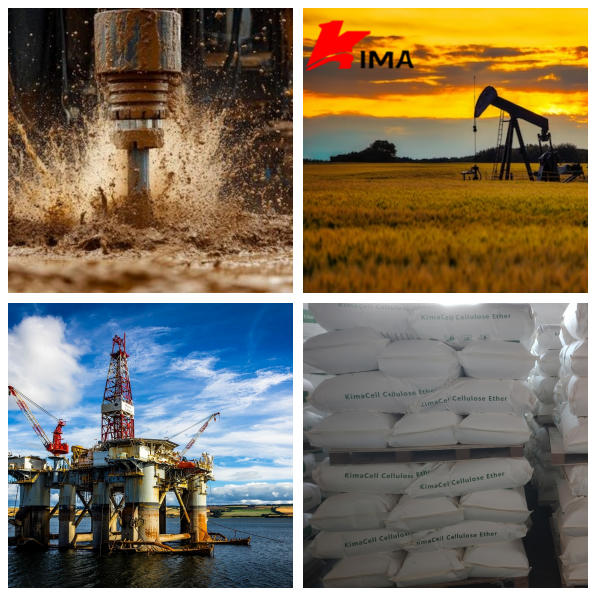
This is one of the most important application fields of PAC. In drilling fluid systems, PAC can be used as a fluid loss reducer, viscosity regulator and stabilizer.
Low-viscosity PAC (PAC-LV) is mainly used to control the filtrate volume, significantly reduce wellbore seepage and fluid loss, and protect the oil and gas layers.
High-viscosity PAC (PAC-HV) can provide higher viscosity and rock-carrying capacity, and improve the rheological properties of drilling fluids.
Its excellent salt and calcium resistance gives it a significant advantage in offshore drilling and highly mineralized Wells.
2.2. Papermaking industry
PAC can be used as a paper strengthening agent and dispersion stabilizer in the papermaking process, which can increase the retention rate of pulp, improve the formability of paper sheets, and enhance the tensile strength and surface smoothness of the finished paper. In addition, it can also reduce the turbidity of water circulation during the papermaking process, enhance the stability of the system and economic benefits.
2.3. Ceramics and Building Materials
In ceramic glazes and architectural coatings, PAC plays a role in thickening, water retention, dispersion and leveling, making the slurry more uniform and the construction performance better. Its excellent water retention can prevent surface cracking and improve the density and strength of the products.
2.4. Pharmaceutical and Food Industry
Due to the high purity, low toxicity and good biocompatibility of PAC, it is often used as a suspending agent, emulsifying stabilizer, tablet binder, etc. in pharmaceutical preparations. In food processing, it can be used as a thickener, stabilizer and emulsifier to enhance the taste and texture stability of the product.
2.5. Daily chemical and environmental protection fields
In the formulations of detergents, skin care products, toothpaste, etc., PAC can improve the consistency and stability of the system and prevent stratification. In the fields of water treatment and environmental protection, PAC can be used as a flocculant additive and wastewater stabilizer, effectively enhancing the efficiency of solid-liquid separation.
Market Development and Trends
With the development of energy exploration, green chemistry and sustainable manufacturing, the PAC market is showing a steady growth trend. At present, China has become one of the major producers and consumers of PAC in the world. The product technology is transforming from low-end general-purpose types to high-purity, high-temperature salt-resistant and environmentally friendly types. In the future, high-performance PAC will develop towards high substitution degree, low residual salt, high solubility and multi-functional compounding to meet the diverse demands of deep well drilling, new materials and environmental protection fields.
Poly anionic cellulose (PAC) has become an indispensable important functional polymer material in modern industry due to its excellent rheological regulation, salt and temperature resistance, and environmental protection performance. With the continuous expansion of application fields and the advancement of technological innovation, PAC will continue to play a broader role in energy, materials, medicine and green chemical engineering, providing strong support for the performance improvement and sustainable development of various industries.


 English
 日本語
日本語 français
 Deutsch
 Español
 العربية
 Türkçe
 italiano
 русский
 português
 Nederland