Rheology Modification and Viscosity Control Mechanism of HEC
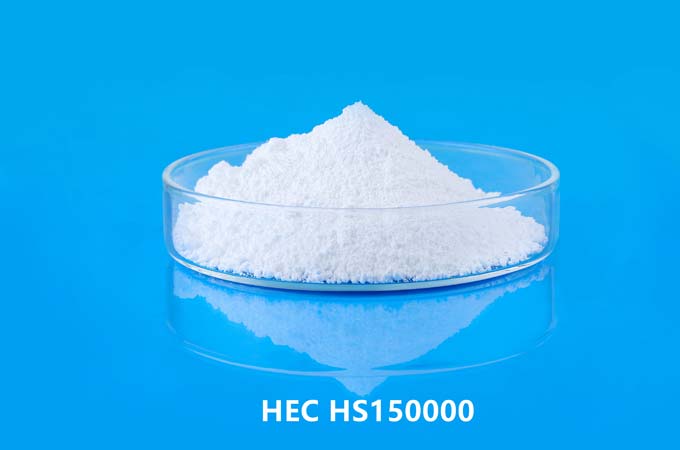
Hydroxyethyl Cellulose (HEC) is widely recognized for its outstanding ability to modify rheology and control viscosity in aqueous systems. As a non-ionic, water-soluble polymer, HEC forms a hydrated three-dimensional network when dispersed in water. This network structure increases the resistance to flow, resulting in enhanced viscosity and improved flow behavior across a wide range of applications.
The rheological performance of HEC is primarily influenced by its molecular weight and degree of substitution. Higher molecular weight grades produce higher viscosity, while lower molecular weight grades provide moderate thickening. The hydroxyethyl substitution along the cellulose backbone improves solubility and prevents strong intermolecular hydrogen bonding, allowing the polymer chains to fully expand and interact with water molecules.
One of the most important characteristics of HEC is its pseudoplastic or shear-thinning behavior. Under low shear conditions, such as in storage tanks or static systems, HEC provides high viscosity, which helps maintain suspension stability and prevents sedimentation of solid particles. When subjected to high shear forces—such as during pumping, mixing, or spraying—the viscosity decreases, allowing the fluid to flow easily. Once the shear force is removed, the viscosity quickly recovers, ensuring stability and performance.
This unique rheological behavior makes HEC an essential additive in many industries. In oilfield drilling fluids, it helps transport drill cuttings to the surface. In coatings and paints, it improves brushability and prevents sagging. In construction materials, it enhances workability and ensures consistent application. The ability to fine-tune rheological properties by selecting specific HEC grades makes it highly versatile and adaptable to different system requirements.
Additionally, HEC contributes to improved flow uniformity and consistency in formulations. It reduces turbulence in liquid systems and ensures smooth processing, which is especially important in large-scale industrial applications. Its non-ionic nature ensures compatibility with a wide range of additives, including salts, surfactants, and other polymers.
In summary, HEC’s rheology modification capabilities are central to its value. Its ability to provide controlled viscosity, shear-thinning behavior, and stable performance under varying conditions makes it an indispensable ingredient in modern industrial formulations.
2: Applications of HEC in Oilfield Operations
HEC plays a critical role in oilfield operations, particularly in drilling, completion, and workover fluids. Its unique properties make it suitable for use in complex downhole environments where stability, efficiency, and reliability are essential.
In drilling fluids, HEC acts as a viscosifier and suspension agent. It increases the carrying capacity of the fluid, ensuring that drill cuttings and debris are transported effectively from the bottom of the well to the surface. This helps maintain a clean wellbore and reduces the risk of operational issues such as pipe sticking and hole collapse. The shear-thinning behavior of HEC allows the fluid to maintain high viscosity at low shear rates while remaining pumpable under high shear conditions.
HEC also contributes to fluid loss control by forming a thin, flexible filter cake on the wellbore wall. This reduces the invasion of drilling fluid into permeable formations and helps protect the integrity of the reservoir. By minimizing filtrate loss, HEC helps maintain formation stability and prevents damage that could reduce oil and gas production efficiency.
In completion and workover fluids, HEC is used to provide controlled viscosity and suspension of solid particles such as proppants and bridging materials. It ensures that these materials remain evenly distributed during placement, improving the effectiveness of operations like gravel packing and well stimulation. HEC’s compatibility with brines and other additives makes it suitable for a wide range of fluid systems.
Another advantage of HEC in oilfield applications is its environmental friendliness. As a cellulose-derived polymer, it is biodegradable and less harmful compared to many synthetic alternatives. This is particularly important in environmentally sensitive drilling locations, including offshore and onshore regulated areas.
Thermal stability is also an important factor. While HEC has moderate resistance to elevated temperatures, selecting the appropriate grade can ensure reliable performance under typical oilfield conditions. Its stability helps maintain consistent fluid properties throughout the operation.
Overall, HEC enhances drilling efficiency, reduces risks, and improves wellbore stability, making it a vital component in modern oilfield fluid systems.
HEC in Construction Materials: Enhancing Performance and Workability
In the construction industry, HEC is widely used as a multifunctional additive in products such as tile adhesives, cement mortars, gypsum-based materials, and self-leveling compounds. Its primary role is to improve workability, water retention, and overall performance of cementitious systems.
One of the most important functions of HEC in construction materials is water retention. Cement hydration requires sufficient water to form a strong and durable structure. However, rapid water loss due to evaporation or absorption into substrates can lead to incomplete hydration, resulting in reduced strength and durability. HEC helps retain water within the mixture, ensuring proper hydration and improved mechanical properties.
HEC also enhances workability by increasing the viscosity and cohesiveness of the mixture. This makes the material easier to spread, apply, and finish, improving application efficiency and reducing labor effort. In tile adhesives, for example, HEC ensures proper adhesion and open time, allowing installers sufficient time to adjust tile positioning.
Another important benefit is anti-sag performance. In vertical applications such as wall tiling, HEC prevents the material from sliding or dripping after application. This ensures consistent thickness and improved installation quality. Its rheological properties also contribute to improved leveling in self-leveling compounds, resulting in smooth and even surfaces.
HEC is also compatible with other construction additives, including redispersible polymer powders, defoamers, and retarders. This compatibility allows formulators to design high-performance systems tailored to specific requirements.
In addition, HEC improves resistance to cracking by controlling shrinkage during drying. By maintaining moisture and improving flexibility, it helps reduce internal stresses that can lead to cracks.
Overall, HEC is an essential component in modern construction materials, contributing to improved durability, workability, and application performance.
HEC in Coatings, Personal Care, and Other Industrial Applications

Beyond oilfield and construction uses, HEC is widely applied in coatings, paints, personal care products, and pharmaceuticals due to its excellent thickening, stabilizing, and film-forming properties.
In water-based coatings and paints, HEC functions as a thickener and stabilizer. It improves viscosity, ensuring uniform pigment distribution and preventing settling during storage. It also enhances application properties such as brushability, rollability, and leveling. The result is a smooth, consistent finish with improved aesthetic quality.
HEC’s ability to control flow behavior helps prevent issues such as dripping, sagging, and spattering during application. It also contributes to the stability and shelf life of coatings by maintaining a homogeneous mixture over time.
In personal care products, such as shampoos, lotions, and toothpaste, HEC is used as a thickening and stabilizing agent. It enhances texture, improves spreadability, and provides a smooth, pleasant feel. In toothpaste, it helps control extrusion and ensures consistent dispensing. In lotions and creams, it stabilizes emulsions and improves product consistency.
In pharmaceuticals, HEC is used in formulations such as eye drops, topical gels, and controlled-release drug systems. Its biocompatibility and non-ionic nature make it safe for use in sensitive applications. It can also form clear gels, making it suitable for transparent formulations.
HEC also finds use in textile printing, paper coatings, and adhesives, where it improves viscosity, binding, and coating uniformity. Its versatility across multiple industries is a testament to its functional performance and adaptability.


 English
 日本語
日本語 français
 Deutsch
 Español
 العربية
 Türkçe
 italiano
 русский
 português
 Nederland