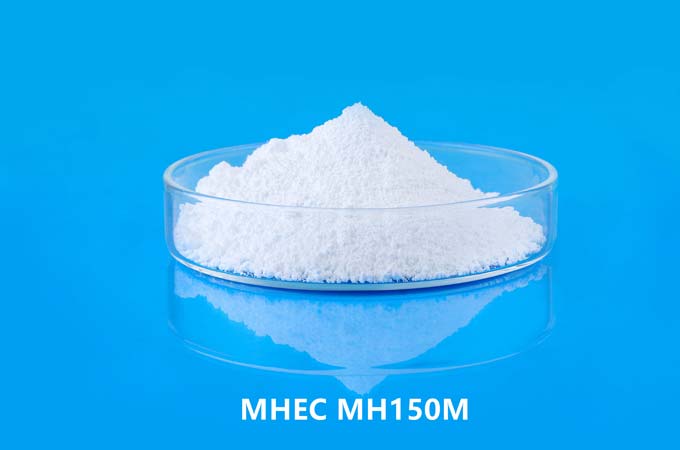
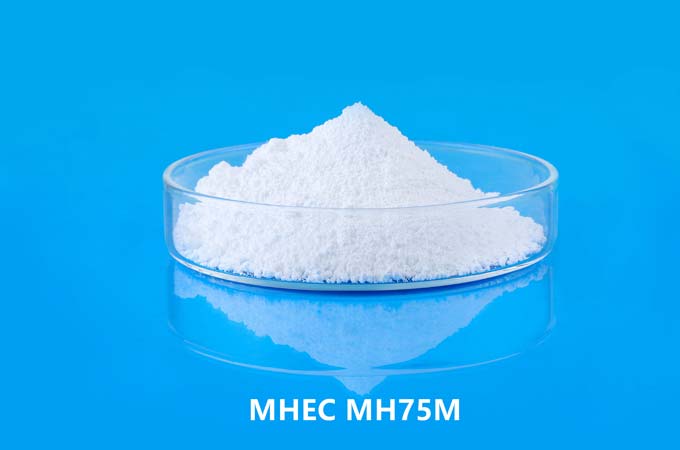
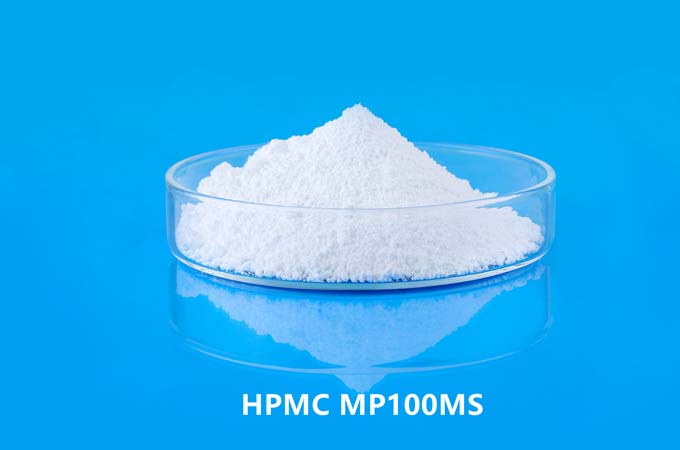
Product Overview
Methylcellulose ethers (MHEC) are commonly used functional additives in building materials, primarily used in tile adhesives, putty powders, and plastering mortars to improve water retention, enhance workability, and improve crack resistance and film-forming properties. Choosing the right MHEC can significantly improve construction processes and final performance.

Selection Considerations
2.1. Viscosity Grade: Select viscosity according to the application. High viscosity is used for putties and plasters requiring high water retention; medium to low viscosity is suitable for tile adhesives and mortars to improve flowability and workability.
2.2.Degree of Substitution (MS/DS): The degree of substitution affects solubility and compatibility. Higher substitution often results in better dispersibility and water retention, but may also affect initial bond strength.
2.3. Particle Size and Dissolution Rate: When rapid reconstitution is required on-site, choose varieties with uniform particle size distribution and fast dissolution rate to avoid clumping.
2.4. Ion Resistance and Compatibility: If the system contains high-calcium, high-salt, or silicate cementitious materials, MHEC with ion resistance or good compatibility with the system should be selected.
2.5.Thermal Stability and Storage Stability: When the construction environment has large temperature differences, products with good thermal stability and resistance to discoloration and deterioration should be preferred.
Common Applications and Recommended Dosage (Reference Range)
Putty Powder (Lightweight/Wall): 0.2–0.6% (solids basis), improves thixotropy, water retention, and surface smoothness.
Tile Adhesive/Adhesive Mortar: 0.1–0.4%, improves workability, increases initial adhesion, and enhances slip resistance.
Plaster Mortar/Waterproof Mortar: 0.15–0.5%, improves water retention, crack prevention, and extends the workable time.
Specific dosages should be confirmed through small-scale testing.
Compatibility and Application Recommendations
4.1. Thoroughly mix MHEC with dry sand or powder first to avoid agglomeration caused by direct addition to water.
4.2. The temperature of the mixing water should not be too high; room temperature or lukewarm water is beneficial for dissolution and viscosity stabilization.
4.3.For formulations containing plasticizers or high oil content components, conduct compatibility tests first. If necessary, adjust the dispersant or change the MHEC type.
4.4. Mixing sequence: Dry mix first → gradually add water while stirring → let stand for 1–3 minutes, then stir again to achieve optimal performance.
4.5. Control the amount of water added and the stirring time. Excessive stirring or addition of water will reduce viscosity and affect performance stability.
Quality Control and Testing Points
Determine the rheological properties (e.g., rotor viscosity, rheological curve) and water retention rate of the compounded product;
Conduct initial and later bond strength, flexural strength, and crack resistance tests;
Perform small-scale tests on the target substrate (adhesion, sanding, color consistency) to verify long-term performance.
Troubleshooting Points (Common Problems and Solutions)
Excessively thick slump during application: Check for excessive MHEC addition or improper mixing procedures;
Surface cracks or shrinkage: May indicate insufficient water retention or excessively large sand gaps in the formula. Adjust the MHEC dosage and water-cement ratio;
Insufficient early bond strength: Check if the MHEC model has an excessively high substitution degree or poor compatibility with other components. Try changing the model or reducing the dosage.
Storage and Safety
Store in a dry, cool place, avoiding moisture and clumping; shelf life is subject to the manufacturer's instructions. Take precautions against dust during handling; wear a mask and protective goggles if necessary.Proper selection of the appropriate type (viscosity, degree of substitution, solubility, and compatibility) and verification through small-scale testing are key to the successful application of construction-grade MHEC. Adjusting the dosage and mixing scheme in conjunction with on-site processes can maximize its contribution to workability and durability.


 English
 日本語
日本語 français
 Deutsch
 Español
 العربية
 Türkçe
 italiano
 русский
 português
 Nederland